
“Last Updated: August 2026”
Affiliate Disclosure: Beyond the Coast participates in affiliate programs including Booking.com, Viator, GetYourGuide, and Sandals Resorts. If you purchase through links on our site, we may earn a small commission at no extra cost to you. This helps keep our travel guides free and supports our research.
Expert Summary
Samaná Dominican Republic is the jungle-covered peninsula on the country’s northeast coast, and it feels almost nothing like Punta Cana. There are no mega-resorts here, just fishing villages, waterfalls, and some of the most beautiful beaches in the Caribbean, Playa Rincón and Playa Frontón among them. The single biggest reason to visit is humpback whale watching, which runs from mid-January to late March and happens nowhere else in the Caribbean at this scale. Expect rougher roads, more rain than the east coast, a cash-based local economy, and noticeably fewer English speakers outside the main hotels. Base yourself in Las Terrenas for comfort and restaurants, or Las Galeras for a quieter, more rustic feel closer to the best beaches. Budget roughly $60 to $90 per person for a whale watching tour, and plan on a full day, not a half day, for most Samaná excursions.
📍 This guide is part of our complete Dominican Republic Travel Guide Hub, covering where to stay, honeymoon planning, the best beaches, and safety tips, all in one place.
Samaná, Dominican Republic: the complete guide to the island’s wildest peninsula
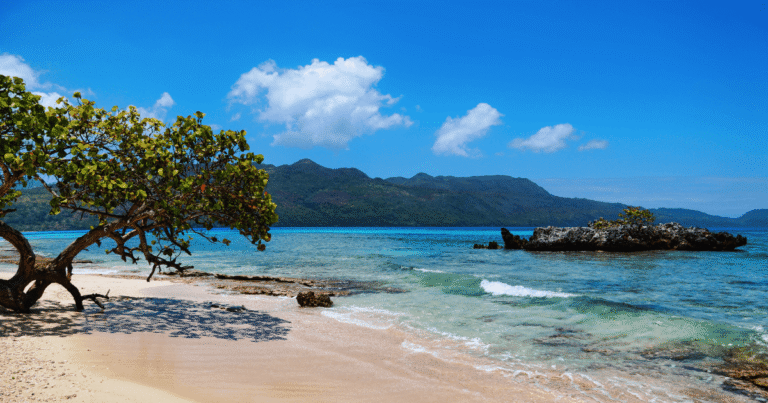
I need to be honest with you before you read another word. If you go to Samaná expecting a smaller version of Punta Cana, you will be disappointed. The roads are rougher, the wifi is worse, and there is no strip of ten resorts to choose between. What you get instead is something I genuinely think is more special, jungle-covered hills dropping straight into turquoise water, fishing villages that have not been rebuilt for tourists, and a beach, Playa Rincón, that I still think about more than any resort pool I have ever paid for.
This guide covers everything I wish someone had told me before my first trip to Samaná Dominican Republic, what it actually costs, when to go, which beach to prioritize if you only have one day, and the parts of the experience that genuinely annoyed me. Not just the postcard version.
Planning to combine Samaná with the rest of the country? Start with our Where to Stay in Dominican Republic guide to see how it compares to Punta Cana and Bayahibe.
What’s in this Samaná guide
Where is Samaná and how do you get there
Humpback whale watching in Samaná Bay
Playa Rincón, the beach everyone comes for
Cayo Levantado, the postcard island
Where to stay, Las Terrenas vs Las Galeras vs Samaná town
What everything actually costs
My honest opinion, including what I did not love
Quick Guide
What Are You Coming to Samaná For?
Best January to March
Whale Watching
Humpback whales migrate to Samaná Bay to breed. Nowhere else in the Caribbean offers this at the same scale.
Read more →Best for the beach itself
Playa Rincón
Kilometers of golden sand, almost no development. My personal favorite beach in the entire country.
Read more →Best for honeymoons
Las Terrenas
Boutique hotels, real restaurants, and easy access to the peninsula’s best beaches without roughing it.
Read more →Not sure if Samaná or Punta Cana fits your trip better? Take the free Honeymoon Matcher quiz →
Where is Samaná and how do you actually get there
Samaná is the peninsula on the far northeast tip of the Dominican Republic, jutting out into the Atlantic and forming the sheltered Samaná Bay. It is a different country visually from Punta Cana, even though it is only around 130 kilometers away by road. Mountains covered in coconut palms drop almost straight into the sea, and the coastline is dotted with small fishing towns rather than resort complexes.
The honest way to get there: there is a small airport, El Catey (AZS), which receives limited direct international flights, mostly from a handful of European charter routes. For nearly everyone flying into Punta Cana or Santo Domingo, that means a road transfer. From Punta Cana, budget three to four hours by private transfer or public bus. From Santo Domingo, it is closer to two hours thanks to a newer highway. The last stretch of road into Las Galeras in particular gets noticeably rougher, so if you are prone to carsickness, sit up front.
My honest take: the drive is long enough that I would not recommend Samaná as a day trip from Punta Cana unless you truly only care about whale watching season and have no other choice. It deserves at least two full nights to feel worth the transfer time.
Humpback whale watching in Samaná Bay
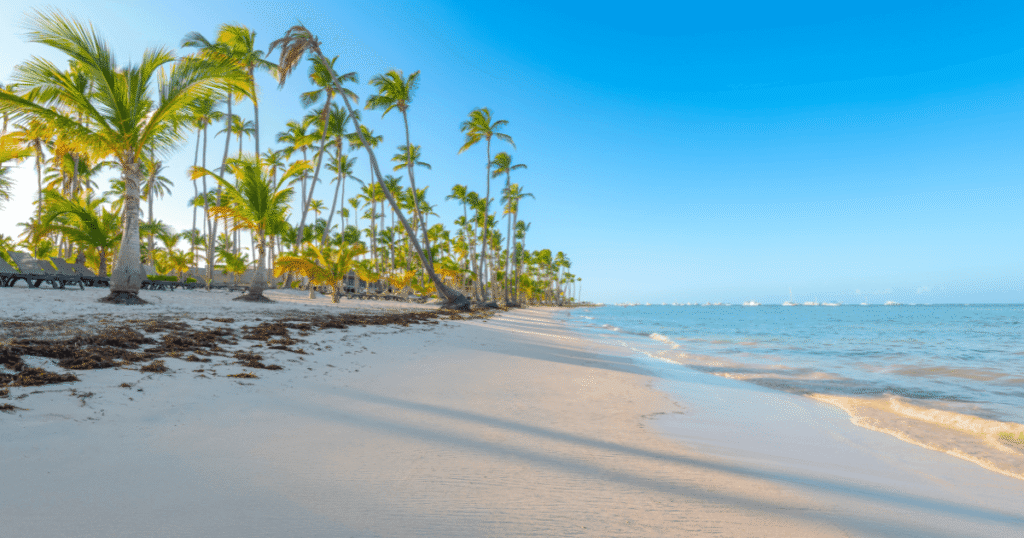
This is the single biggest reason most people visit Samaná, and it genuinely earns the hype. Every year between roughly mid-January and late March, thousands of humpback whales migrate from the North Atlantic to the warm, sheltered waters of Samaná Bay to breed and give birth. It is one of the most reliable whale watching destinations anywhere in the world, and February is generally considered the peak.
Boats leave daily from the town of Samaná during the season, and tours typically last three to four hours. Sightings are not guaranteed on any single trip, but during peak weeks in February most boats see multiple whales, often breaching or tail-slapping close enough that you do not need a zoom lens to feel it.
What I actually did not love: the boats can get crowded during peak season, and if the sea is choppy that day, it is a rough three to four hours for anyone prone to seasickness. Take medication in advance if you are unsure, the ride out to the whale zone is not calm water. Also, the whales are wild animals, not performers, some tours have quiet days with only distant sightings, so manage your expectations rather than treating it as a guaranteed spectacle.
Browse Samaná whale watching tours on Viator
Playa Rincón, the beach everyone actually comes for
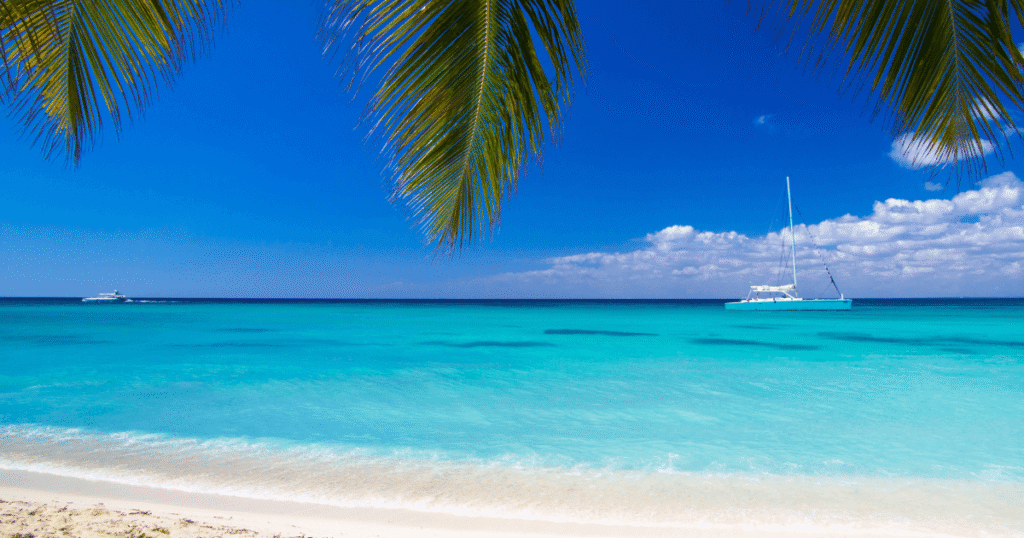
I already wrote about Playa Rincón in our Best Beaches in Dominican Republic guide, but it deserves a fuller picture here, because it is genuinely the reason to prioritize Samaná over anywhere else on the island if beauty is your main criteria. Kilometers of golden sand curve along a bay backed by green hills, and even in high season there are long stretches where you will not see another group.
Getting there: most people arrive by boat from Las Galeras, a scenic 20 to 30 minute ride that costs around $10 to $20 per person on a shared boat, or you can hire a 4×4 taxi to take the rougher inland road for a similar price. There are a handful of small local restaurants at one end of the beach serving fresh grilled fish, but bring cash, cards are not an option here.
My honest take: this is the beach I would send a couple who wants their Dominican Republic honeymoon photos to look completely different from everyone else’s. It is not the place for reliable wifi, air conditioning, or a cocktail menu, and I mean that as the highest compliment I can give a beach.
Playa Frontón and the fishing village of Las Galeras
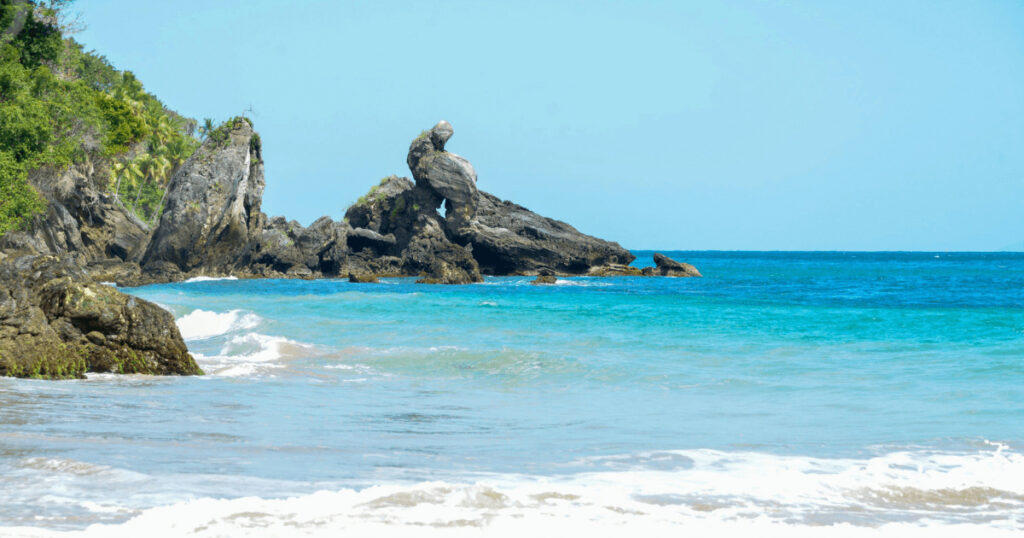
Las Galeras is the small fishing town at the eastern tip of the peninsula, and it is your launch point for two of the best things in this guide, Playa Rincón and Playa Frontón. Frontón is the dramatic one, dramatic limestone cliffs framing water that shifts between deep turquoise and emerald depending on the light, with genuinely no development on the sand at all.
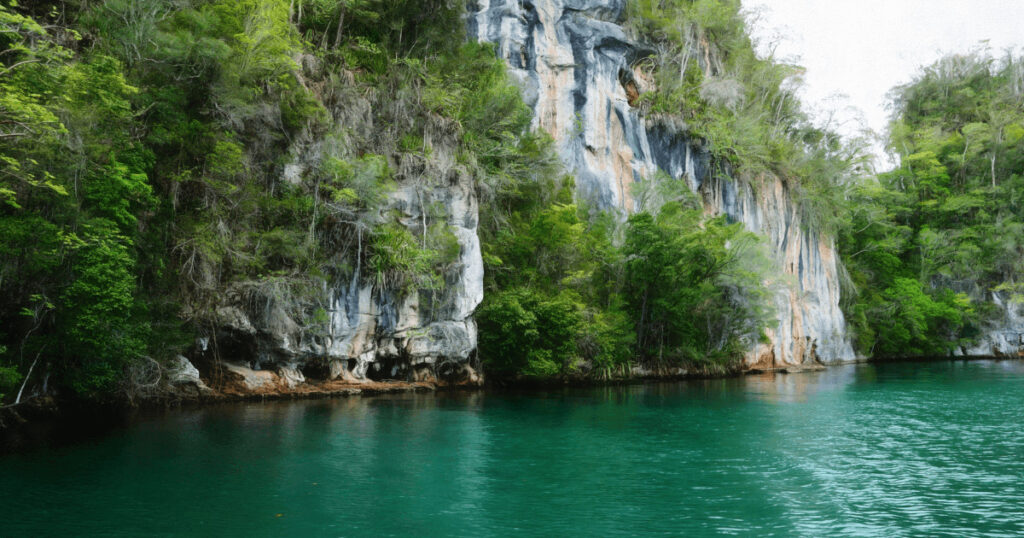
There is no road to Playa Frontón. You reach it by boat from Las Galeras, roughly 15 to 20 minutes and $15 to $25 per person on a shared trip, or by a genuinely demanding hike through rugged jungle terrain that takes about an hour each way if you are reasonably fit. Many boat trips combine Frontón with a stop at nearby Playa Madama, another small, boat-only cove.
My honest take: Las Galeras itself is charming but very basic, think dirt roads, a handful of family-run guesthouses, and limited restaurant choice compared to Las Terrenas. If you want rustic authenticity, you will love it. If you want a proper dinner menu and reliable air conditioning every night, base yourself in Las Terrenas instead and do Frontón and Rincón as day trips.
Cayo Levantado, the postcard island with a catch
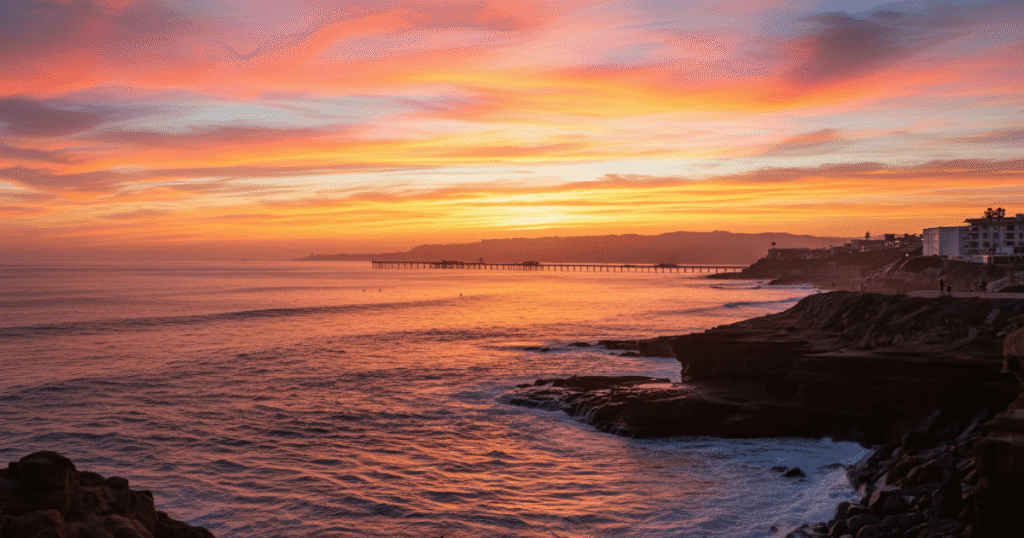
Cayo Levantado is a small island in Samaná Bay, sometimes called Bacardi Island after old rum advertisements were filmed there. A short 10 to 15 minute boat ride from the town of Samaná gets you to a public beach with calm, shallow water framed by palm trees, plus a small entrance fee, typically $5 to $10 per person, sometimes bundled into tour packages.
My honest take, and the catch: because it is so easy to reach, Cayo Levantado gets busy, especially with tour groups arriving in waves. It is prettier in photos than it feels in person once fifty other people are standing in the same shallow water. I would treat it as a convenient half-day add-on if you are already in Samaná town, not a reason to travel to the peninsula on its own. Between January and March, the same short boat ride can double as an easy way to spot whales in the bay along the way, which does make the trip more worthwhile during that window.
El Limón waterfall, Samaná’s most photographed excursion
El Limón is a roughly 40 meter waterfall in the hills between Las Terrenas and Samaná town, and it is the peninsula’s most popular inland excursion. The classic way to visit is by horseback, a bumpy 30 to 45 minute ride through farmland and jungle, followed by a short walk down to the falls themselves, where you can swim in the pool at the base.
Typical cost: horseback tours run around $30 to $50 per person including a guide, and most operators bundle in a light lunch. Jeep safari tours that combine El Limón with other stops usually run higher, around $60 to $80 per person.
My honest take, and this is the one negative I feel strongly about: El Limón is beautiful, but it is also the most touristy, rushed-feeling experience in this entire guide. Horses are worked hard on a fixed schedule, guides hustle you along to fit the next group in, and the falls themselves get crowded by mid-morning with multiple tour groups arriving at once. If animal welfare on tourist horseback tours is something you think about, this is worth researching operators carefully, quality varies a lot between companies. I would go early, before 9am if possible, or consider the walking-only option instead of horseback if you have any hesitation.
Los Haitises National Park, mangroves and hidden caves
Los Haitises National Park sits across Samaná Bay from the peninsula itself, reached by boat tour, and it is one of the most underrated experiences in this entire guide. Limestone karst hills rise straight out of mangrove-lined water, and several caves along the route contain Taíno cave paintings that predate European contact.
Tours typically run three to four hours and cost around $60 to $80 per person, usually departing from Samaná town or Sabana de la Mar on the opposite shore. Bring bug spray, mosquitoes are genuinely aggressive in the mangroves, more so than anywhere else on this list.
My honest take: this was the biggest surprise of my entire Samaná trip in the best way, and also the least talked about in most guides. If you only have time for one inland excursion and El Limón’s crowds do not appeal to you, choose this instead.
Where to stay in Samaná, Las Terrenas vs Las Galeras vs Samaná town
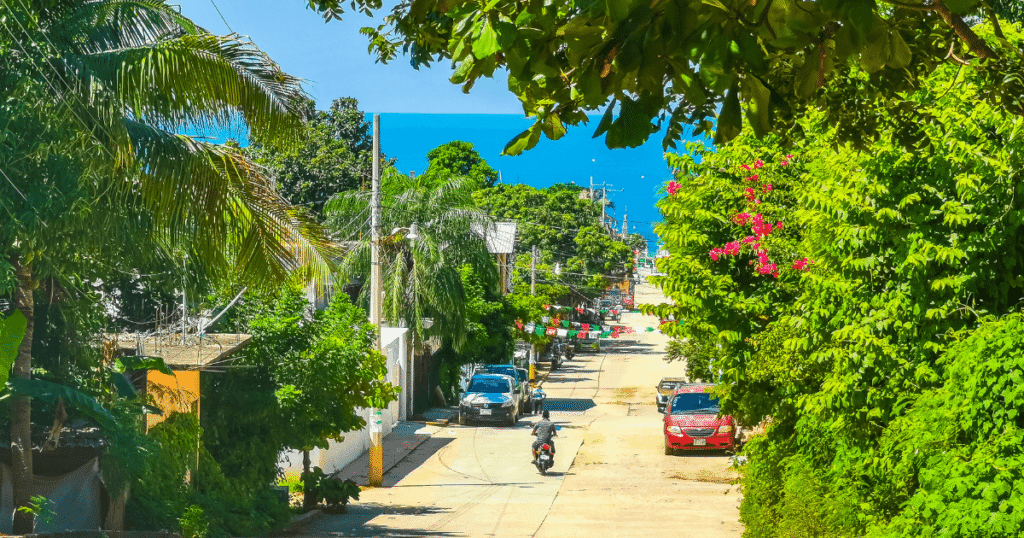
This is the question I get asked most, and the honest answer is that it depends entirely on your comfort threshold. Las Terrenas is the most developed and comfortable base, with a genuinely good restaurant scene shaped by decades of French and Italian expat influence, boutique hotels, and easy access to Playa Cosón and Playa Bonita.
Las Galeras is smaller, quieter, and closer to Playa Rincón and Playa Frontón, but with far fewer restaurant options and rougher infrastructure. Samaná town itself (Santa Bárbara de Samaná) is the practical choice if whale watching is your main priority, since most boats depart directly from its harbor, but it has the least charm of the three as a place to simply relax.
For a full regional comparison including Punta Cana and Bayahibe, see our Where to Stay in Dominican Republic guide.
What everything in Samaná actually costs
Here is a straightforward price reference based on typical rates across operators. Prices fluctuate by season and operator, so treat these as planning ranges, not guarantees.
| Experience | Typical Price (per person) | Duration / Rate Type |
|---|---|---|
| Whale watching tour | $60 to $90 | 3 to 4 hours |
| Boat to Playa Rincón (shared) | $10 to $20 | 20 to 30 minutes each way |
| Boat to Playa Frontón (shared) | $15 to $25 | 15 to 20 minutes each way |
| Cayo Levantado entrance and boat | $10 to $20 | Half day |
| El Limón waterfall (horseback) | $30 to $50 | Half day |
| Los Haitises National Park tour | $60 to $80 | 3 to 4 hours |
| Private transfer from Punta Cana | $150 to $250 (per vehicle) | 3 to 4 hours |
| Boutique hotel, Las Terrenas | $100 to $220 per night | Per night |
| Guesthouse, Las Galeras | $40 to $90 per night | Per night |
My honest opinion of Samaná, including what I did not love
I do not think a travel guide is useful if it only tells you the good parts, so here is what genuinely frustrated me. The roads outside Las Terrenas are rough, and some transfers took noticeably longer than Google Maps suggested. Rain is more frequent here than on the east coast, even outside the official rainy season, because the peninsula’s mountains catch weather systems that pass Punta Cana by entirely.
Card payment is unreliable outside the main hotels, so carry more cash than you think you need. English is spoken far less consistently than in Punta Cana, which is part of the charm but does require more patience and a translation app. And as I mentioned above, the El Limón horseback experience felt more like a tourist processing line than the peaceful jungle excursion the brochures promise, choose your operator carefully or skip the horses entirely.
None of this changed my overall opinion. Samaná gave me the single most beautiful beach afternoon I have had anywhere in the Dominican Republic, at Playa Rincón, and an unexpectedly moving morning drifting through the mangroves at Los Haitises. It asks more of you than a resort stay does, and it gives more back in return. If you want a Dominican Republic trip that feels earned rather than packaged, this is where you go.
Tip: pair Samaná with two or three nights in Punta Cana or Bayahibe for the best of both worlds, resort comfort on one end of your trip, real adventure on the other.
Beyond the Coast · Dominican Republic Tool
Is Samaná Right for Your Trip?
Answer a few quick questions and find out whether Samaná, Punta Cana, or a mix of both fits your travel style best.
Take the Honeymoon Matcher Quiz →Samaná Dominican Republic: Frequently Asked Questions
Is Samaná worth visiting in the Dominican Republic?
Yes, particularly for travelers who want beaches without resort development, whale watching, and jungle scenery. It requires more effort to reach and get around than Punta Cana, so it suits travelers comfortable with a rougher, more independent style of travel.
When is whale watching season in Samaná?
Humpback whale watching in Samaná Bay runs from mid-January to late March, with February generally considered the peak month for sightings.
How do I get from Punta Cana to Samaná?
Private transfer takes three to four hours by road and typically costs $150 to $250 per vehicle. From Santo Domingo, the drive is closer to two hours. There is a small local airport, El Catey (AZS), but international flight options are limited.
Is Playa Rincón better than Bávaro Beach?
They serve different purposes. Playa Rincón is more beautiful and far less crowded, but has no resorts, restaurants beyond a few local stalls, or reliable infrastructure. Bávaro is more convenient and resort-friendly. For a full comparison, see our Best Beaches in Dominican Republic guide.
Where should I stay in Samaná, Las Terrenas or Las Galeras?
Las Terrenas offers more comfort, restaurants, and boutique hotels. Las Galeras is smaller and closer to Playa Rincón and Playa Frontón, but with fewer amenities. Choose Las Terrenas for comfort, Las Galeras for proximity to the best beaches.
Is El Limón waterfall worth the horseback tour?
The waterfall itself is beautiful, but the horseback experience can feel rushed and overly commercial, particularly by mid-morning when multiple tour groups arrive at once. Research operators carefully or consider the walking-only option instead.
How much does a trip to Samaná cost?
Budget $60 to $90 per person for whale watching, $30 to $80 per person for other excursions like El Limón or Los Haitises, and $40 to $220 per night for accommodation depending on whether you choose a guesthouse in Las Galeras or a boutique hotel in Las Terrenas.
Is Samaná good for a honeymoon?
Yes, particularly for couples who want privacy and scenery over resort amenities. Playa Rincón and Playa Bonita in Las Terrenas are popular honeymoon picks. Read our full Dominican Republic Honeymoon guide for more.
Can I visit Samaná as a day trip from Punta Cana?
It is possible but not recommended given the three to four hour drive each way. Samaná deserves at least two full nights.
Planning the rest of your trip? See our guide to the 10 Best Beaches in Dominican Republic and our Where to Stay guide to decide how to split your time between Samaná and the rest of the island.
Don’t forget to follow us on Pinterest for more Dominican Republic travel inspiration. For official tourism information, visit the Dominican Republic Ministry of Tourism website.
Have you been to Samaná, or is it on your list for this whale watching season?